The new European Resuscitation Council (ERC) 2025 guidelines are clear: providing ventilation significantly increases survival chances.
When every second counts, hesitation is the real enemy.
The new European Resuscitation Guidelines (ERC 2025) bring clarity to a long-debated question among first aiders in training: should you give rescue breaths, or are chest compressions alone enough?
The essence remains unchanged — do something, and do it immediately — but science confirms that the right combination of compressions and ventilation can mean the difference between life and death
What’s new in the ERC 2025 guidelines?
The European Resuscitation Council (ERC) has updated its Basic Life Support (BLS) guidelines in 2025.
While the fundamental principles remain the same, several key points have been refined and emphasized:
Start faster, hesitate less.
Every second counts. The ERC reinforces that anyone — even without medical training — can save a life. The message is clearer than ever: start chest compressions as soon as the person is unresponsive and not breathing normally.

Chest compressions remain the cornerstone of an effectice CPR
The quality of compressions directly determines survival chances.
The rate remains 100–120 per minute, with a depth of 5–6 cm, and full chest recoil after each compression.
The ERC again stresses minimal interruptions — consistency matters more than perfection.
Easier use of AEDs.
The new guidelines highlight even faster access to an Automated External Defibrillator (AED) — ideally within 2–3 minutes of cardiac arrest.
AEDs are becoming simpler to use, and the ERC encourages workplaces and public spaces to improve accessibility.

Ventilation: still essential for maximum survival.
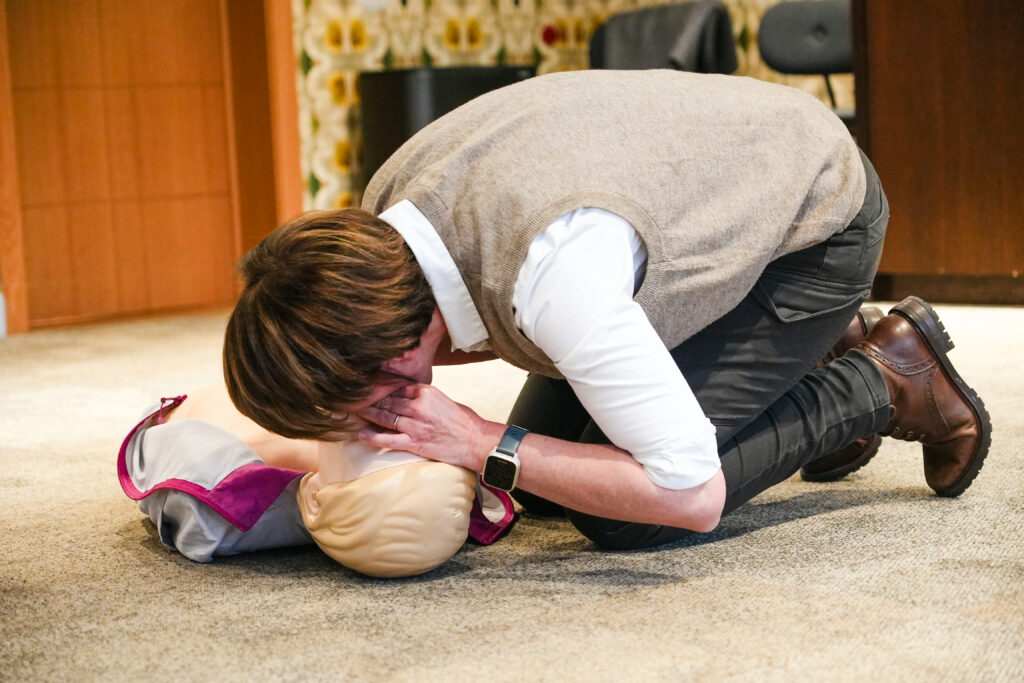
Although some people still question whether mouth-to-mouth ventilation is necessary or “safe,” the ERC states unequivocally: ventilation saves lives.
Oxygen delivery remains crucial to prevent brain damage.
Anyone trained in CPR should perform 30 compressions followed by 2 rescue breaths.
Only when ventilation is impossible or unsafe (for example, without a mask or in high infection-risk settings) should you continue with compressions only.
But scientific consensus is clear: when performed correctly, adding breaths significantly increases survival.
What remains essential?
A simple, powerful message runs through all the new guidelines: resuscitation works —
but only if we act.
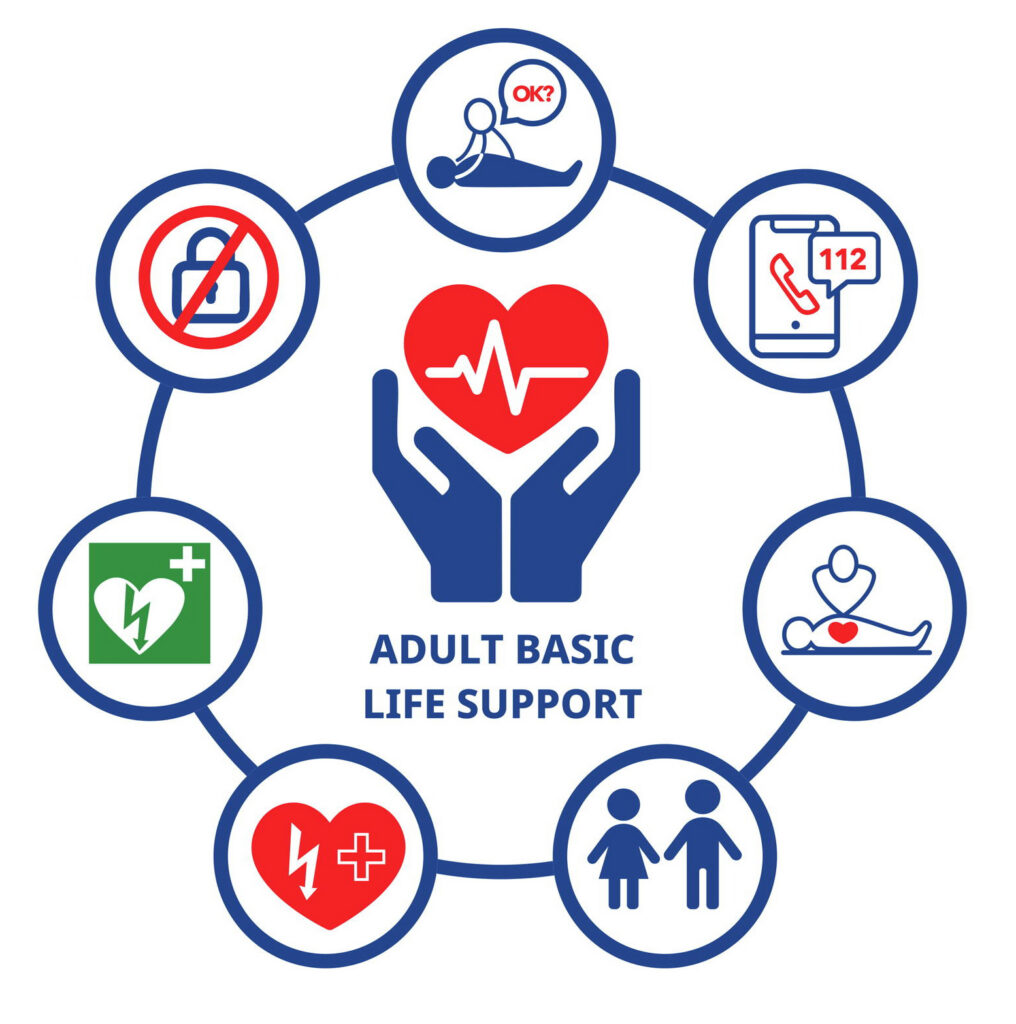
- Check if the person responds and breathes.
- Call 112 (or your local emergency number).
- Start chest compressions.
- Add rescue breaths if possible.
- Use an AED as soon as it’s available.

What else has changed in 2025?
The ERC 2025 update goes beyond technique — it broadens the vision to include learning, teamwork, and care.
The new guidelines highlight that everyone can learn CPR — even children.
The temporary COVID-19 adaptations have been removed: the standard 30 compressions / 2 breaths method is once again the norm for trained responders.
There’s increased focus on teamwork, inclusion, and modern learning methods, such as virtual reality and online training.
The guidelines also stress post-resuscitation care, particularly for children and witnesses — because resuscitation doesn’t end when the heartbeat returns; care and emotional support are now integral parts of the process
Ready for 2026?
The new ERC guidelines remind us that resuscitation is not just theory — it’s a life-saving skill that must stay sharp.
Whether you work in an office, hotel, factory, or healthcare facility, every team member can make a difference.
At Kingsm3n we ensure your people not only know what to do, but also have the confidence to act.
Request your refresher or basic training today and prepare your organisation for the CPR standards of tomorrow

Michaël Marbais
Entrepreneur and Level 1 Prevention advisor.
As managing partner of Kingsm3n, Ken Do It and S.Godart, he helps companies turn safety, security, leadership, and people-centred policies into concrete action – in every routine and every crisis.