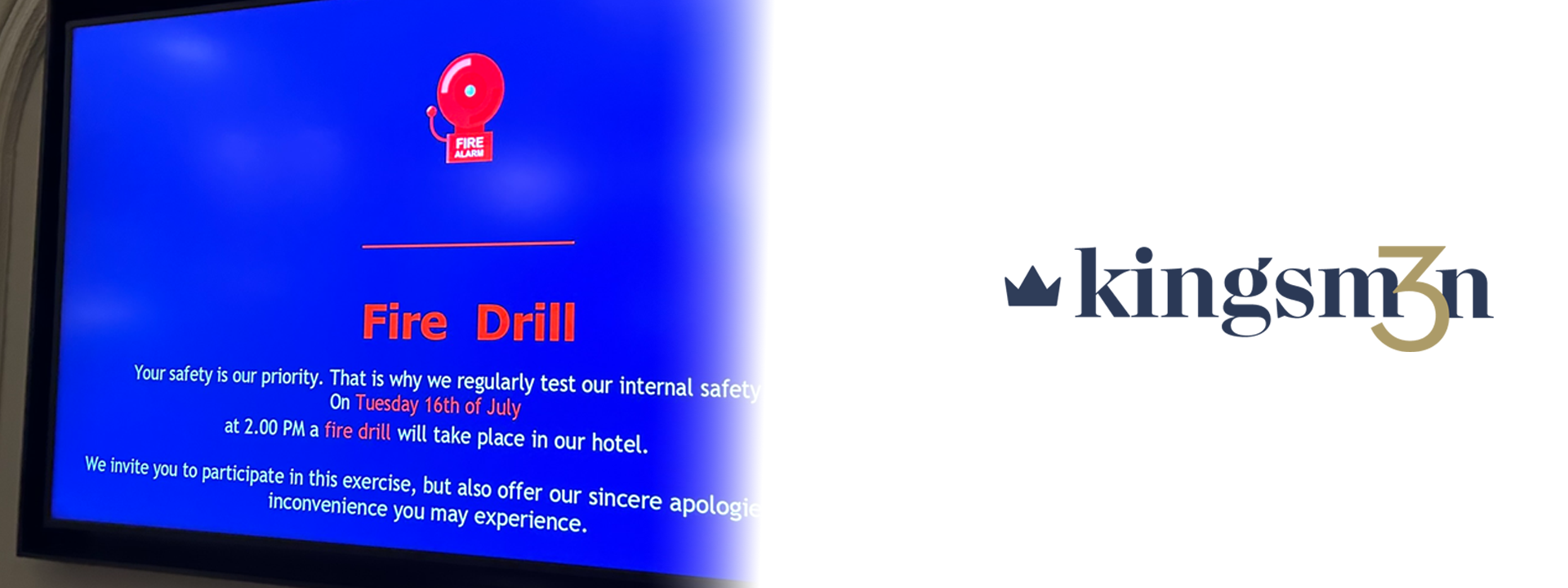
A crisis or emergency doesn’t only affect multinationals. SMEs face risks every single day. A fire, a cyberattack, reputational damage, or an unexpected medical emergency… any business can be confronted with these challenges.
The difference between long-lasting damage and a fast recovery is not the crisis itself, but rather crisis communication, the mental resiliance of employees and having a solid internal emergency plan in place.
Yet only 29 % of small businesses have a formal crisis management plan. Nearly half admit to having no plan at all to deal with threats (source 1).
The international standard ISO 31000 (Risk Management) highlights that risks can never be fully avoided but can be managed. By systematically identifying, assessing, and mitigating risks, SMEs can not only respond more effectively to crises but also build long-term strategic resilience.
Why Crisis Communication and Resilience Are Crucial for SMEs

Realistic Crisis Scenarios for SMEs
A strong crisis management plan for SME’s should address different types of risks:
- Operational incidents
- Example: machine breakdown or delivery delays.
- Checklist: who to notify? How to communicate with customers?
- On-site emergencies
- Examples: fire, evacuation due to gas leak or power outage, medical emergency, or even an armed incident (active shooter).
- Checklist: is there an intern noodplan in place? Are evacuation and lockdown drills practiced? Who takes the lead?
- Reputation & media
- Example: a customer complaint goes viral.
- Checklist: who manages the official message? What tone to adopt?
- Digital threats
- Example: phishing, ransomware.
- Checklist: are backups secure? Who decides to shut down systems?
- Human crises
- Example: a serious accident or illness of an employee.
Checklist: how to support the team emotionally? What external help is available?
Internal Emergency Plan: Legal Obligation and Strategic Advantage
An internael emergency plan is mandatory for every company, but too often it remains a paper exercise. For SMEs, this means:
- Evacuatieon procedures: clear signage, assembly points, and regular drills.
- Crisis coordinators: a designated leader per site.
- First aid and fire response: trained colleagues readily available.
- Lockdown protocols: in case of threats or armed incidents.
- Communication with emergency services and stakeholders: who calls, who coordinates?

The international standard NFPA 1600 (Standard on Continuity, Emergency and Crisis Management) stresses that emergency plans must not only be written but also tested and evaluated. This is the difference between a theoretical plan and an operational system.
The international standard ISO 22301 (Business Continuity Management Systems – BCMS) provides a clear framework for business continuity. It helps organizations not only recover after a crisis but also bcontinue operating during the disruption. For SMEs, this is especially critical: if you are not operational within five days, the chance of permanent closure rises dramatically.
Beyond Legal Compliance: Brand Standards in Crisis Management
Many large enterprises go beyond national legal requirements by introducing their own brand standards for crisis management. In the hotel industry, for example, the Hilton Fire Standard requires that evacuation drills take place several times a year and that crisis team simulations are organized regularly at all locations. Such measures are not only about compliance, but about protecting people, assets and brand reputationconsistenly worldwide. SMEs may not operate on the same scale, but they can adopt similar practices in a tailored way. Even small steps beyond the legal minimum can significantly boost eresilience and preparedness.
Crisis communication: clarity Instead of chaos
In a crisis, silence is deadly. Rumors and panic spread faster than facts. SMEs need a simple but powerful crisis communication plan:
🔹 Internal
- WhatsApp, Teams groups, or walkie-talkies for quick updates
- Clear rules: who communicates, when, and how
🔹 External
- Standard email templates for customers
- Pre-prepared press releases and assigned spokespersons
- Social media guidelines: who posts, what tone to use
Best practice: test this plan annually with a crisis drill.

Mental Resilience: employees as the Key to recovery
A crisis always impacts the people behind the business first. Mental resilience determines how quickly a team bounces back.
- Stress resilience training: coping with pressure and uncertainty.
- Crisis leadership training: remaining calm, decisive, and empathetic under stress.
- Support systems: making trusted persons or Employee Assistance Programs (EAP) accessible.
Companies that invest in mental resilience of employees see loyalty, productivity, and recovery capacity increase significantly.
Action plan for crisis management in SMEs
- Form a crisis team (business owner, HR, communication, external advisor).
- Develop checklists and manuals (operational, digital, reputation & emergencies).
- Practice scenarios — from evacuation to cyberattacks, reputation crises, and even active shooter simulations.
- Strengthen mental resilience (coaching, training, culture of openness).
Conclusion
Crisis communication, mental resilience and a solid internal emergency plan make the difference between chaos and recovery. For SMEs, resilience is not a luxury, but a prerequisite for sustainable growth and trust-building.
International references such as ISO 31000 (risk management), ISO 22301 (business continuity) and NFPA 1600 (crisismanagement & continuïteit) point the way. At Kingsm3n, we translate these standards into concrete, applicable plans for SMEs.
A partner with experience
“How resilient is your organization?”
Find out the Kingsm3n Crisis & Resilience Quickscan – a practical tool that immediately identifies your strengths and improvement areas.
Sources:
https://pmc.ncbi.nlm.nih.gov/articles/PMC8441854/
https://online.qmu.ac.uk/blogs/crisis-management-plans-preparing-your-business-for-the-unexpected/
https://riskandresiliencehub.com/23-business-continuity-statistics-you-need-to-know/
: leverage subsidies via the KMO-portefeuille (SME)
Did you know that Flemish SMEs can receive subsidies for training and consultancy?
This makes investing in resilience even more accessible.
Learn more on our KMO-portefeuille page


Michaël Marbais
Entrepreneur and Level 1 Prevention advisor.
As managing partner of Kingsm3n and Ken Do It, he helps companies turn safety, security, leadership, and people-centred policies into concrete action – in every routine and every crisis.